Buy corporateinventionboard.eu ?
We are moving the project
corporateinventionboard.eu .
Are you interested in purchasing the domain
corporateinventionboard.eu ?
domain@kv-gmbh.de · 0541-91531010
Buy corporateinventionboard.eu ?
Can you explain the difference between invention and innovation using an example?
Invention refers to the creation of a new product, process, or idea, while innovation involves the improvement or modification of an existing invention to make it more valuable or useful. For example, the invention of the telephone by Alexander Graham Bell was a groundbreaking creation that allowed for long-distance communication. However, the innovation of smartphones by companies like Apple and Samsung took the basic concept of the telephone and added features like internet connectivity, cameras, and apps to revolutionize how we communicate and access information. **
Can you explain Kohlberg's stages of moral development?
Kohlberg's stages of moral development are a theory that outlines the progression of moral reasoning in individuals. The theory consists of three levels, each with two stages. The first level is the pre-conventional level, where individuals make decisions based on self-interest and avoiding punishment. The second level is the conventional level, where individuals make decisions based on societal norms and expectations. The third level is the post-conventional level, where individuals make decisions based on universal ethical principles. Kohlberg's theory suggests that individuals progress through these stages as they mature and develop their moral reasoning abilities. **

Similar search terms for Explain
Top-Angebote
Products related to Explain:
-
HARPERCOLLINS Creative Confidence by Tom & David Kelley – Unleashing Your Creative Potential & Innovation MindsetA powerful and inspiring book from the founders of IDEO, the award-winning design firm, on unleashing the creativity that lies within each and every one of us. Too often, companies and individuals assume that creativity and innovation are the domain of the ‘creative types’. But two of the foremost experts in innovation, design and creativity on the planet show us that each and every one of us is creative. In an entertaining and inspiring narrative that draws on countless stories from their work at IDEO, and with many of the world's top companies and design firms, David and Tom Kelley identify the principles and strategies that will allow us to tap into our creative potential in our work lives, and in our personal lives, allow us to think outside the box in terms of how we approach and solve problems. ‘Creative Confidence’ is a book that will help each of us be more productive and successful in our lives and in our careers.4,95 £*Shipping: 1,99 £Secure redirect to the provider
-
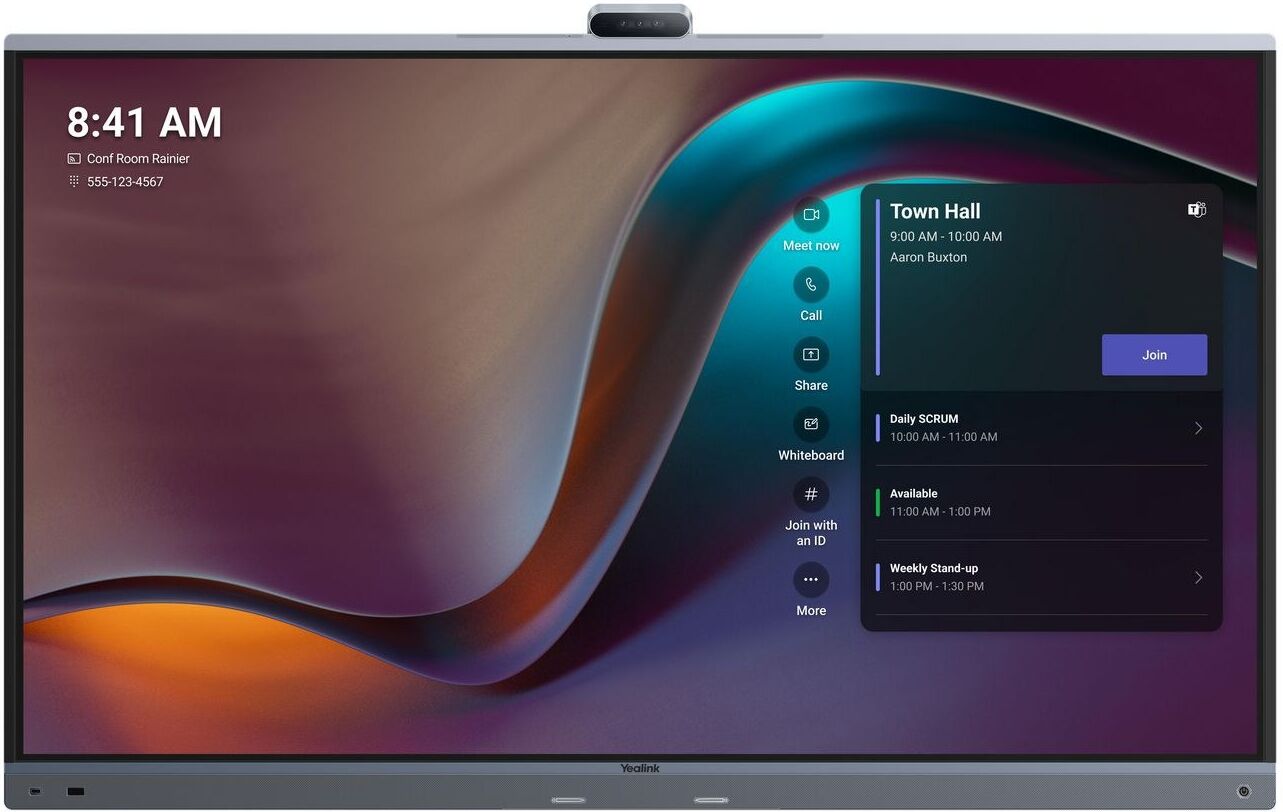
Yealink MeetingBoard 65-inch 4K Interactive Collaboration Display (MB65-A001)Yealink MeetingBoard 65 (MB65-A001): a 65-inch 4K Ultra HD LED-backlit interactive touch display for meeting rooms, with built-in camera, microphone array and speakers for Microsoft Teams Rooms and Zoom Rooms. Runs Android with a built-in processor and Wi-Fi.3896,99 £*Shipping: 0,00 £Secure redirect to the provider
-
Dell Pro Silent Wired Collaboration Keyboard KB525C UK QWERTY - BlackProfessional wired collaboration keyboard featuring spill-resistant design and silent key switches. Includes 15 programmable shortcut keys, dedicated Copilot key, and volume controls for enhanced productivity. Full numeric keypad and UK QWERTY layout with comprehensive 3-year NBD Advance Exchange support.45,99 £*Shipping: 0,00 £Secure redirect to the provider




-
What would be a good example of an innovation to explain the product life cycle?
A good example of an innovation to explain the product life cycle is the evolution of smartphones. When smartphones were first introduced, they were a new and innovative product in the introduction stage of the product life cycle. As they gained popularity and became more widely adopted, they entered the growth stage. Over time, as new features and improvements were made, they reached the maturity stage. Finally, as new technologies and advancements emerged, older models began to decline in sales, entering the decline stage of the product life cycle. This example demonstrates how innovations can impact the different stages of a product's life cycle. **
-
How does Carl Rogers explain the development of psychological problems?
Carl Rogers explains the development of psychological problems as stemming from a lack of congruence between a person's self-concept and their actual experiences. He suggests that when individuals experience a discrepancy between their ideal self and their real self, they may develop psychological problems such as anxiety, depression, or low self-esteem. Rogers also emphasizes the role of conditional positive regard from others, where individuals only receive acceptance and approval when they meet certain conditions, leading to a lack of self-acceptance and psychological distress. Overall, Rogers believes that psychological problems arise from a lack of self-acceptance and congruence between one's self-concept and experiences. **
-
Can someone explain the development of dietary patterns in biology?
Dietary patterns in biology have developed over time as a result of various factors such as evolutionary changes, environmental influences, and cultural practices. Early humans had a diet mainly consisting of fruits, vegetables, and lean meats obtained through hunting and gathering. As societies evolved, agriculture and domestication of animals led to the inclusion of grains, dairy, and other food sources in the human diet. Additionally, globalization and technological advancements have further influenced dietary patterns, leading to the consumption of processed foods and a shift towards more sedentary lifestyles. Overall, the development of dietary patterns in biology is a complex interplay of biological, environmental, and cultural factors. **
-
Can someone explain the population development in Germany from 1910 to 2100?
The population development in Germany from 1910 to 2100 has seen significant changes. In the early 20th century, the population steadily increased, reaching a peak just before World War II. However, the population declined during and after the war due to significant loss of life and displacement. In the post-war period, the population gradually recovered and experienced a baby boom in the 1950s and 1960s. Since then, the population has been relatively stable, with a slight decline in recent years due to low birth rates and an aging population. Projections for the future suggest that the population will continue to decline unless there is a significant increase in immigration or fertility rates. **
Why do technicians often find it difficult to explain technology to laypeople?
Technicians often find it difficult to explain technology to laypeople because they are experts in their field and may struggle to simplify complex concepts into easily understandable terms. Additionally, they may use technical jargon that is unfamiliar to non-experts, leading to confusion. Furthermore, technicians may have a deep understanding of the technology, making it challenging for them to break down the information into simpler terms that can be easily grasped by those with less technical knowledge. **
Will the development of technology ever stop?
It is unlikely that the development of technology will ever stop. As long as there are new problems to solve and new opportunities to explore, there will be a need for technological innovation. Additionally, the pace of technological advancement has been accelerating in recent years, with new breakthroughs and discoveries constantly pushing the boundaries of what is possible. While the specific direction and focus of technological development may change over time, it is likely that the overall trend of progress will continue. **
Top-Angebote
Products related to Explain:
-
Counterart Absorbent Stone Coasters - Santa Can Explain - Set of 4 - 4x4x271Absorbent stone coaster with decorative print. Durable stoneware construction allows for continuous absorption of condensation. Made in the USA. Cork backing protects tabletops. Set of 4.25,99 $*Shipping: 0,00 $Secure redirect to the provider
-
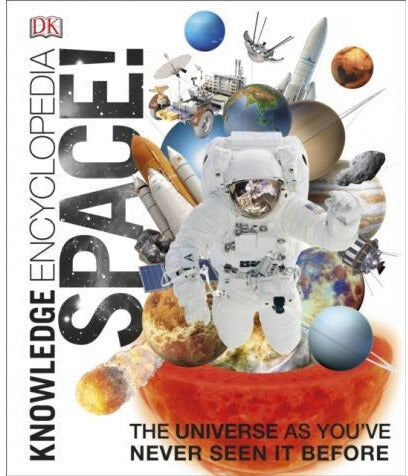
Dorling Kindersley DK Knowledge Encyclopedia Space The Ultimate Space & Astronomy Reference Guide for Kids and Families - Planets, Stars, Galaxies & the Universe ExplainExplore the wonders of the universe with the DK Knowledge Encyclopedia Space, an inspiring and visually stunning guide to outer space.Packed with high-definition photographs, 3D illustrations, infographics, facts, timelines, and scientific explanations, this encyclopedia takes readers on an unforgettable journey from Earth to the farthest reaches of the cosmos. Perfect for curious readers, young astronomers, and space enthusiasts, this book explains: The solar system, planets, moons, and dwarf planets Stars, nebulas, black holes, galaxies & cosmic phenomena Space exploration, astronauts & spacecraft The Big Bang, universe evolution & future missions The latest science discoveries explained in kid-friendly language A brilliant educational book for STEM learners, classrooms, home libraries, and children aged 8–14 who love space.9,99 £*Shipping: 2,99 £Secure redirect to the provider
-
HARPERCOLLINS Creative Confidence by Tom & David Kelley – Unleashing Your Creative Potential & Innovation MindsetA powerful and inspiring book from the founders of IDEO, the award-winning design firm, on unleashing the creativity that lies within each and every one of us. Too often, companies and individuals assume that creativity and innovation are the domain of the ‘creative types’. But two of the foremost experts in innovation, design and creativity on the planet show us that each and every one of us is creative. In an entertaining and inspiring narrative that draws on countless stories from their work at IDEO, and with many of the world's top companies and design firms, David and Tom Kelley identify the principles and strategies that will allow us to tap into our creative potential in our work lives, and in our personal lives, allow us to think outside the box in terms of how we approach and solve problems. ‘Creative Confidence’ is a book that will help each of us be more productive and successful in our lives and in our careers.4,95 £*Shipping: 1,99 £Secure redirect to the provider
-
Can you explain the difference between invention and innovation using an example?
Invention refers to the creation of a new product, process, or idea, while innovation involves the improvement or modification of an existing invention to make it more valuable or useful. For example, the invention of the telephone by Alexander Graham Bell was a groundbreaking creation that allowed for long-distance communication. However, the innovation of smartphones by companies like Apple and Samsung took the basic concept of the telephone and added features like internet connectivity, cameras, and apps to revolutionize how we communicate and access information. **
-
Can you explain Kohlberg's stages of moral development?
Kohlberg's stages of moral development are a theory that outlines the progression of moral reasoning in individuals. The theory consists of three levels, each with two stages. The first level is the pre-conventional level, where individuals make decisions based on self-interest and avoiding punishment. The second level is the conventional level, where individuals make decisions based on societal norms and expectations. The third level is the post-conventional level, where individuals make decisions based on universal ethical principles. Kohlberg's theory suggests that individuals progress through these stages as they mature and develop their moral reasoning abilities. **
-
What would be a good example of an innovation to explain the product life cycle?
A good example of an innovation to explain the product life cycle is the evolution of smartphones. When smartphones were first introduced, they were a new and innovative product in the introduction stage of the product life cycle. As they gained popularity and became more widely adopted, they entered the growth stage. Over time, as new features and improvements were made, they reached the maturity stage. Finally, as new technologies and advancements emerged, older models began to decline in sales, entering the decline stage of the product life cycle. This example demonstrates how innovations can impact the different stages of a product's life cycle. **
-
How does Carl Rogers explain the development of psychological problems?
Carl Rogers explains the development of psychological problems as stemming from a lack of congruence between a person's self-concept and their actual experiences. He suggests that when individuals experience a discrepancy between their ideal self and their real self, they may develop psychological problems such as anxiety, depression, or low self-esteem. Rogers also emphasizes the role of conditional positive regard from others, where individuals only receive acceptance and approval when they meet certain conditions, leading to a lack of self-acceptance and psychological distress. Overall, Rogers believes that psychological problems arise from a lack of self-acceptance and congruence between one's self-concept and experiences. **
Similar search terms for Explain
-
Yealink MeetingBoard 65-inch 4K Interactive Collaboration Display (MB65-A001)Yealink MeetingBoard 65 (MB65-A001): a 65-inch 4K Ultra HD LED-backlit interactive touch display for meeting rooms, with built-in camera, microphone array and speakers for Microsoft Teams Rooms and Zoom Rooms. Runs Android with a built-in processor and Wi-Fi.3896,99 £*Shipping: 0,00 £Secure redirect to the provider
-
Dell Pro Silent Wired Collaboration Keyboard KB525C UK QWERTY - BlackProfessional wired collaboration keyboard featuring spill-resistant design and silent key switches. Includes 15 programmable shortcut keys, dedicated Copilot key, and volume controls for enhanced productivity. Full numeric keypad and UK QWERTY layout with comprehensive 3-year NBD Advance Exchange support.45,99 £*Shipping: 0,00 £Secure redirect to the provider
-
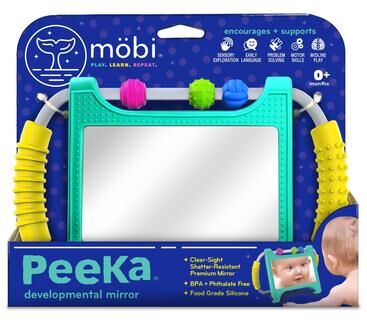
Mobi Peeka Development MirrorPEEKA® developmental mirror was designed by our team of doctors, therapists and parents to help children explore, learn and grow. When you place PEEKA® in the hands of your little ones, you will be amazed at the variety of ways they find to play...26,99 $*Shipping: 0,00 $Secure redirect to the provider
-
Yealink MeetingBoard Pro 75-inch 4K Interactive Collaboration Display (MB75Pro-A02)Yealink MeetingBoard Pro 75 (MB75Pro-A02): an all-in-one 75-inch 4K UHD (3840 x 2160) anti-glare multi-touch display for medium-sized meeting rooms. It has a 400 cd/m² panel, a built-in triple-eye camera system (3 x 50 MP), a 16-MEMS microphone array and full-range speakers, and runs Microsoft Teams Rooms on Android with an interactive whiteboard and wireless content sharing.4732,99 £*Shipping: 0,00 £Secure redirect to the provider
-
Can someone explain the development of dietary patterns in biology?
Dietary patterns in biology have developed over time as a result of various factors such as evolutionary changes, environmental influences, and cultural practices. Early humans had a diet mainly consisting of fruits, vegetables, and lean meats obtained through hunting and gathering. As societies evolved, agriculture and domestication of animals led to the inclusion of grains, dairy, and other food sources in the human diet. Additionally, globalization and technological advancements have further influenced dietary patterns, leading to the consumption of processed foods and a shift towards more sedentary lifestyles. Overall, the development of dietary patterns in biology is a complex interplay of biological, environmental, and cultural factors. **
-
Can someone explain the population development in Germany from 1910 to 2100?
The population development in Germany from 1910 to 2100 has seen significant changes. In the early 20th century, the population steadily increased, reaching a peak just before World War II. However, the population declined during and after the war due to significant loss of life and displacement. In the post-war period, the population gradually recovered and experienced a baby boom in the 1950s and 1960s. Since then, the population has been relatively stable, with a slight decline in recent years due to low birth rates and an aging population. Projections for the future suggest that the population will continue to decline unless there is a significant increase in immigration or fertility rates. **
-
Why do technicians often find it difficult to explain technology to laypeople?
Technicians often find it difficult to explain technology to laypeople because they are experts in their field and may struggle to simplify complex concepts into easily understandable terms. Additionally, they may use technical jargon that is unfamiliar to non-experts, leading to confusion. Furthermore, technicians may have a deep understanding of the technology, making it challenging for them to break down the information into simpler terms that can be easily grasped by those with less technical knowledge. **
-
Will the development of technology ever stop?
It is unlikely that the development of technology will ever stop. As long as there are new problems to solve and new opportunities to explore, there will be a need for technological innovation. Additionally, the pace of technological advancement has been accelerating in recent years, with new breakthroughs and discoveries constantly pushing the boundaries of what is possible. While the specific direction and focus of technological development may change over time, it is likely that the overall trend of progress will continue. **
* All prices are inclusive of VAT and, if applicable, plus shipping costs. The offer information is based on the details provided by the respective shop and is updated through automated processes. Real-time updates do not occur, so deviations can occur in individual cases. ** Note: Parts of this content were created by AI.