Buy corporateinventionboard.eu ?
We are moving the project
corporateinventionboard.eu .
Are you interested in purchasing the domain
corporateinventionboard.eu ?
domain@kv-gmbh.de · 0541-91531010
Buy corporateinventionboard.eu ?
What is galactose in chemistry?
Galactose is a monosaccharide sugar that is a component of lactose, which is the sugar found in milk. It is a simple sugar that is classified as a hexose, meaning it contains six carbon atoms. Galactose is an important source of energy for the body and is used in various metabolic processes. In chemistry, galactose is often studied for its structure, properties, and reactions as part of the broader field of carbohydrate chemistry. **
What is the structure of galactose in beta-galactopyranose?
In beta-galactopyranose, galactose is a six-carbon sugar arranged in a pyranose ring structure. The pyranose ring consists of five carbon atoms and one oxygen atom. The galactose molecule is attached to the pyranose ring at the first carbon atom, forming a beta-glycosidic bond. The remaining carbon atoms in galactose are involved in forming hydroxyl groups, which contribute to the overall structure and properties of the molecule. **


Similar search terms for Galactose
Top-Angebote
Products related to Galactose:
-
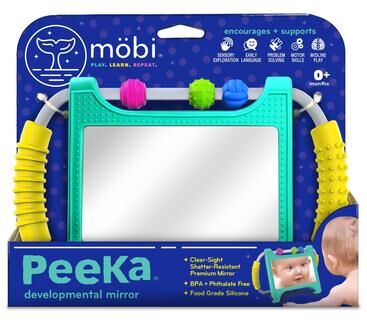
Mobi Peeka Development MirrorPEEKA® developmental mirror was designed by our team of doctors, therapists and parents to help children explore, learn and grow. When you place PEEKA® in the hands of your little ones, you will be amazed at the variety of ways they find to play...30,49 $*Shipping: 0,00 $Secure redirect to the provider
-
HARPERCOLLINS Creative Confidence by Tom & David Kelley – Unleashing Your Creative Potential & Innovation MindsetA powerful and inspiring book from the founders of IDEO, the award-winning design firm, on unleashing the creativity that lies within each and every one of us. Too often, companies and individuals assume that creativity and innovation are the domain of the ‘creative types’. But two of the foremost experts in innovation, design and creativity on the planet show us that each and every one of us is creative. In an entertaining and inspiring narrative that draws on countless stories from their work at IDEO, and with many of the world's top companies and design firms, David and Tom Kelley identify the principles and strategies that will allow us to tap into our creative potential in our work lives, and in our personal lives, allow us to think outside the box in terms of how we approach and solve problems. ‘Creative Confidence’ is a book that will help each of us be more productive and successful in our lives and in our careers.4,95 £*Shipping: 1,99 £Secure redirect to the provider
-
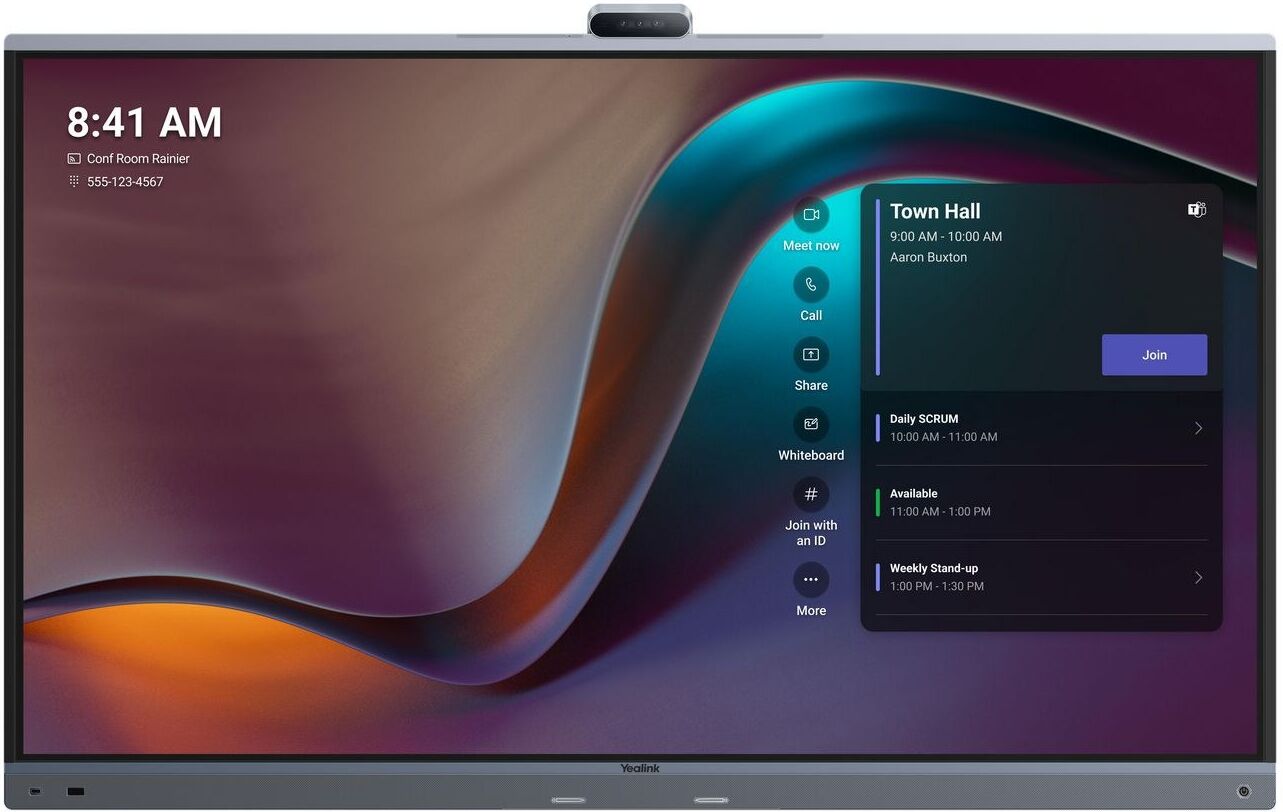
Yealink MeetingBoard 65-inch 4K Interactive Collaboration Display (MB65-A001)Yealink MeetingBoard 65 (MB65-A001): a 65-inch 4K Ultra HD LED-backlit interactive touch display for meeting rooms, with built-in camera, microphone array and speakers for Microsoft Teams Rooms and Zoom Rooms. Runs Android with a built-in processor and Wi-Fi.3896,99 £*Shipping: 0,00 £Secure redirect to the provider
-
Dell Pro Silent Wired Collaboration Keyboard KB525C UK QWERTY - BlackProfessional wired collaboration keyboard featuring spill-resistant design and silent key switches. Includes 15 programmable shortcut keys, dedicated Copilot key, and volume controls for enhanced productivity. Full numeric keypad and UK QWERTY layout with comprehensive 3-year NBD Advance Exchange support.45,99 £*Shipping: 0,00 £Secure redirect to the provider



-
Why can glucose oxidase not oxidize fructose or galactose?
Glucose oxidase is specific to glucose because it has a specific active site that can only bind to glucose molecules. This enzyme is designed to recognize the specific structure of glucose and catalyze its oxidation. Fructose and galactose have different structures than glucose, so they cannot fit into the active site of glucose oxidase and therefore cannot be oxidized by this enzyme. **
-
What is the structural formula of cellobiose from D-galactose?
The structural formula of cellobiose from D-galactose involves the condensation of two D-galactose molecules. The hydroxyl group on carbon 1 of one D-galactose molecule reacts with the hydroxyl group on carbon 4 of another D-galactose molecule, forming a β-1,4-glycosidic bond. This results in the formation of cellobiose, which is a disaccharide composed of two D-galactose units linked together. The structural formula of cellobiose can be represented as β-D-Gal-(1→4)-D-Gal. **
-
How can the carbohydrates galactose, sucrose, and amylose be experimentally detected?
Galactose can be detected using the enzyme galactose oxidase, which converts galactose to galactonolactone, producing hydrogen peroxide in the process. The hydrogen peroxide can then be detected using a colorimetric assay. Sucrose can be detected using the enzyme invertase, which hydrolyzes sucrose into glucose and fructose. The presence of glucose and fructose can then be detected using specific enzymatic assays. Amylose can be detected using iodine, which forms a blue complex with amylose. This can be observed visually or quantified using spectrophotometry. **
-
Will the development of technology ever stop?
It is unlikely that the development of technology will ever stop. As long as there are new problems to solve and new opportunities to explore, there will be a need for technological innovation. Additionally, the pace of technological advancement has been accelerating in recent years, with new breakthroughs and discoveries constantly pushing the boundaries of what is possible. While the specific direction and focus of technological development may change over time, it is likely that the overall trend of progress will continue. **

Why is the development of technology not progressing faster?
The development of technology is not progressing faster due to a variety of factors. One reason is the complexity of the problems that technology aims to solve, which often require extensive research and testing. Additionally, there are limitations in funding and resources for technological development, which can slow down progress. Furthermore, ethical and regulatory considerations can also hinder the rapid advancement of technology, as new innovations must be carefully evaluated for their potential impact on society. **
What is a specialist in information technology in application development?
A specialist in information technology in application development is a professional who focuses on creating and maintaining software applications. They have expertise in programming languages, software development methodologies, and application design. Their role involves analyzing user needs, designing application solutions, writing code, testing and debugging applications, and ensuring that they meet the required specifications and standards. These specialists often work closely with other IT professionals and stakeholders to deliver high-quality, user-friendly applications. **
Top-Angebote
Products related to Galactose:
-
Sesderma Reti Age 5 Liposomal Serum Anti-Aging Innovation 30mLA facial serum for wrinkles and signs of ageing. Reduces wrinkles and fine lines. Hydrates and strengthens barrier. Restores youthful radiance. 5-Retinoid System: smooths wrinkles, accelerates renewal, and boosts collagen. Biomimetic Peptides: fill expression lines by stimulating collagen synthesis.41,69 £*Shipping: 5,34 £Secure redirect to the provider
-
Mobi Peeka Development MirrorPEEKA® developmental mirror was designed by our team of doctors, therapists and parents to help children explore, learn and grow. When you place PEEKA® in the hands of your little ones, you will be amazed at the variety of ways they find to play...30,49 $*Shipping: 0,00 $Secure redirect to the provider
-
HARPERCOLLINS Creative Confidence by Tom & David Kelley – Unleashing Your Creative Potential & Innovation MindsetA powerful and inspiring book from the founders of IDEO, the award-winning design firm, on unleashing the creativity that lies within each and every one of us. Too often, companies and individuals assume that creativity and innovation are the domain of the ‘creative types’. But two of the foremost experts in innovation, design and creativity on the planet show us that each and every one of us is creative. In an entertaining and inspiring narrative that draws on countless stories from their work at IDEO, and with many of the world's top companies and design firms, David and Tom Kelley identify the principles and strategies that will allow us to tap into our creative potential in our work lives, and in our personal lives, allow us to think outside the box in terms of how we approach and solve problems. ‘Creative Confidence’ is a book that will help each of us be more productive and successful in our lives and in our careers.4,95 £*Shipping: 1,99 £Secure redirect to the provider
-
What is galactose in chemistry?
Galactose is a monosaccharide sugar that is a component of lactose, which is the sugar found in milk. It is a simple sugar that is classified as a hexose, meaning it contains six carbon atoms. Galactose is an important source of energy for the body and is used in various metabolic processes. In chemistry, galactose is often studied for its structure, properties, and reactions as part of the broader field of carbohydrate chemistry. **
-
What is the structure of galactose in beta-galactopyranose?
In beta-galactopyranose, galactose is a six-carbon sugar arranged in a pyranose ring structure. The pyranose ring consists of five carbon atoms and one oxygen atom. The galactose molecule is attached to the pyranose ring at the first carbon atom, forming a beta-glycosidic bond. The remaining carbon atoms in galactose are involved in forming hydroxyl groups, which contribute to the overall structure and properties of the molecule. **
-
Why can glucose oxidase not oxidize fructose or galactose?
Glucose oxidase is specific to glucose because it has a specific active site that can only bind to glucose molecules. This enzyme is designed to recognize the specific structure of glucose and catalyze its oxidation. Fructose and galactose have different structures than glucose, so they cannot fit into the active site of glucose oxidase and therefore cannot be oxidized by this enzyme. **
-
What is the structural formula of cellobiose from D-galactose?
The structural formula of cellobiose from D-galactose involves the condensation of two D-galactose molecules. The hydroxyl group on carbon 1 of one D-galactose molecule reacts with the hydroxyl group on carbon 4 of another D-galactose molecule, forming a β-1,4-glycosidic bond. This results in the formation of cellobiose, which is a disaccharide composed of two D-galactose units linked together. The structural formula of cellobiose can be represented as β-D-Gal-(1→4)-D-Gal. **
Similar search terms for Galactose
-
Yealink MeetingBoard 65-inch 4K Interactive Collaboration Display (MB65-A001)Yealink MeetingBoard 65 (MB65-A001): a 65-inch 4K Ultra HD LED-backlit interactive touch display for meeting rooms, with built-in camera, microphone array and speakers for Microsoft Teams Rooms and Zoom Rooms. Runs Android with a built-in processor and Wi-Fi.3896,99 £*Shipping: 0,00 £Secure redirect to the provider
-
Dell Pro Silent Wired Collaboration Keyboard KB525C UK QWERTY - BlackProfessional wired collaboration keyboard featuring spill-resistant design and silent key switches. Includes 15 programmable shortcut keys, dedicated Copilot key, and volume controls for enhanced productivity. Full numeric keypad and UK QWERTY layout with comprehensive 3-year NBD Advance Exchange support.45,99 £*Shipping: 0,00 £Secure redirect to the provider
-
Yealink MeetingBoard Pro 75-inch 4K Interactive Collaboration Display (MB75Pro-A02)Yealink MeetingBoard Pro 75 (MB75Pro-A02): an all-in-one 75-inch 4K UHD (3840 x 2160) anti-glare multi-touch display for medium-sized meeting rooms. It has a 400 cd/m² panel, a built-in triple-eye camera system (3 x 50 MP), a 16-MEMS microphone array and full-range speakers, and runs Microsoft Teams Rooms on Android with an interactive whiteboard and wireless content sharing.4732,99 £*Shipping: 0,00 £Secure redirect to the provider
-
Classic Editions The Complete Art of War – 8 Book Hardback Box Set Sun Tzu & Ancient Chinese Military Strategy Classics Leadership, Warfare & Strategy CollectionExplore centuries of strategic thinking with The Complete Art of War – 8 Books Collection Hardback Box Set, an impressive collection of classical Chinese writings on warfare, leadership, tactics and strategy. Bringing together influential works from ancient Chinese military thought, this hardback collection includes titles such as The Art of War, Methods of the Sima, Wuzi, Wei Liaozi, Three Strategies of Huang Shigong, and Six Secret Teachings of Taigong, alongside additional works included in the eight-volume set. These enduring texts examine subjects including leadership, planning, discipline, intelligence, diplomacy, battlefield tactics and strategic decision-making. Although written in the context of ancient warfare, many of their principles have subsequently attracted readers interested in history, leadership and strategic thinking. Presented as an 8-volume hardback boxed collection, the set is ideal for readers of military history, students of classical philosophy and collectors of beautifully presented classic works. Why Readers Will Love This Collection Includes 8 hardback volumes in a collectible box set Features influential works of ancient Chinese military strategy Explores strategy, leadership, tactics and decision-making Excellent addition to military history and philosophy collections Attractive hardback format for a home or study library Ideal gift for history, strategy and classic literature enthusiasts The Complete Art of War 8 Book Collection brings together some of history's most enduring works on strategy in one impressive hardback set. Titles In This Set: Notebook Questions and Replies Three Strategies of Huang Shigong Wuzi Wei Liaozi The Methods of The Sima Six Secret Teachings of Taigong The Art of War16,99 £*Shipping: 2,99 £Secure redirect to the provider
-
How can the carbohydrates galactose, sucrose, and amylose be experimentally detected?
Galactose can be detected using the enzyme galactose oxidase, which converts galactose to galactonolactone, producing hydrogen peroxide in the process. The hydrogen peroxide can then be detected using a colorimetric assay. Sucrose can be detected using the enzyme invertase, which hydrolyzes sucrose into glucose and fructose. The presence of glucose and fructose can then be detected using specific enzymatic assays. Amylose can be detected using iodine, which forms a blue complex with amylose. This can be observed visually or quantified using spectrophotometry. **
-
Will the development of technology ever stop?
It is unlikely that the development of technology will ever stop. As long as there are new problems to solve and new opportunities to explore, there will be a need for technological innovation. Additionally, the pace of technological advancement has been accelerating in recent years, with new breakthroughs and discoveries constantly pushing the boundaries of what is possible. While the specific direction and focus of technological development may change over time, it is likely that the overall trend of progress will continue. **
-
Why is the development of technology not progressing faster?
The development of technology is not progressing faster due to a variety of factors. One reason is the complexity of the problems that technology aims to solve, which often require extensive research and testing. Additionally, there are limitations in funding and resources for technological development, which can slow down progress. Furthermore, ethical and regulatory considerations can also hinder the rapid advancement of technology, as new innovations must be carefully evaluated for their potential impact on society. **
-
What is a specialist in information technology in application development?
A specialist in information technology in application development is a professional who focuses on creating and maintaining software applications. They have expertise in programming languages, software development methodologies, and application design. Their role involves analyzing user needs, designing application solutions, writing code, testing and debugging applications, and ensuring that they meet the required specifications and standards. These specialists often work closely with other IT professionals and stakeholders to deliver high-quality, user-friendly applications. **
* All prices are inclusive of VAT and, if applicable, plus shipping costs. The offer information is based on the details provided by the respective shop and is updated through automated processes. Real-time updates do not occur, so deviations can occur in individual cases. ** Note: Parts of this content were created by AI.