Buy corporateinventionboard.eu ?
We are moving the project
corporateinventionboard.eu .
Are you interested in purchasing the domain
corporateinventionboard.eu ?
domain@kv-gmbh.de · 0541-91531010
Buy corporateinventionboard.eu ?
How can one create such monochromatic images?
To create monochromatic images, one can start by selecting a subject with a dominant color or tone. This could be a single object, a landscape, or a person wearing a specific color. Next, adjust the camera settings to enhance the chosen color or tone, such as increasing contrast or saturation. Finally, during post-processing, use editing software to further emphasize the monochromatic look by converting the image to black and white or desaturating all colors except the chosen one. **
Can polarizing filters be used to generate monochromatic light?
No, polarizing filters cannot be used to generate monochromatic light. Polarizing filters work by selectively allowing light waves that are oscillating in a specific direction to pass through, while blocking light waves oscillating in other directions. This can help to reduce glare and improve contrast in photography, but it does not change the color of the light. Monochromatic light is light of a single wavelength or color, and polarizing filters do not have the ability to change the wavelength or color of the light passing through them. **


Similar search terms for Monochromatic
Top-Angebote
Products related to Monochromatic:
-
HARPERCOLLINS Creative Confidence by Tom & David Kelley – Unleashing Your Creative Potential & Innovation MindsetA powerful and inspiring book from the founders of IDEO, the award-winning design firm, on unleashing the creativity that lies within each and every one of us. Too often, companies and individuals assume that creativity and innovation are the domain of the ‘creative types’. But two of the foremost experts in innovation, design and creativity on the planet show us that each and every one of us is creative. In an entertaining and inspiring narrative that draws on countless stories from their work at IDEO, and with many of the world's top companies and design firms, David and Tom Kelley identify the principles and strategies that will allow us to tap into our creative potential in our work lives, and in our personal lives, allow us to think outside the box in terms of how we approach and solve problems. ‘Creative Confidence’ is a book that will help each of us be more productive and successful in our lives and in our careers.4,95 £*Shipping: 1,99 £Secure redirect to the provider
-
Dell Pro Silent Wired Collaboration Keyboard KB525C UK QWERTY - BlackProfessional wired collaboration keyboard featuring spill-resistant design and silent key switches. Includes 15 programmable shortcut keys, dedicated Copilot key, and volume controls for enhanced productivity. Full numeric keypad and UK QWERTY layout with comprehensive 3-year NBD Advance Exchange support.45,99 £*Shipping: 0,00 £Secure redirect to the provider
-
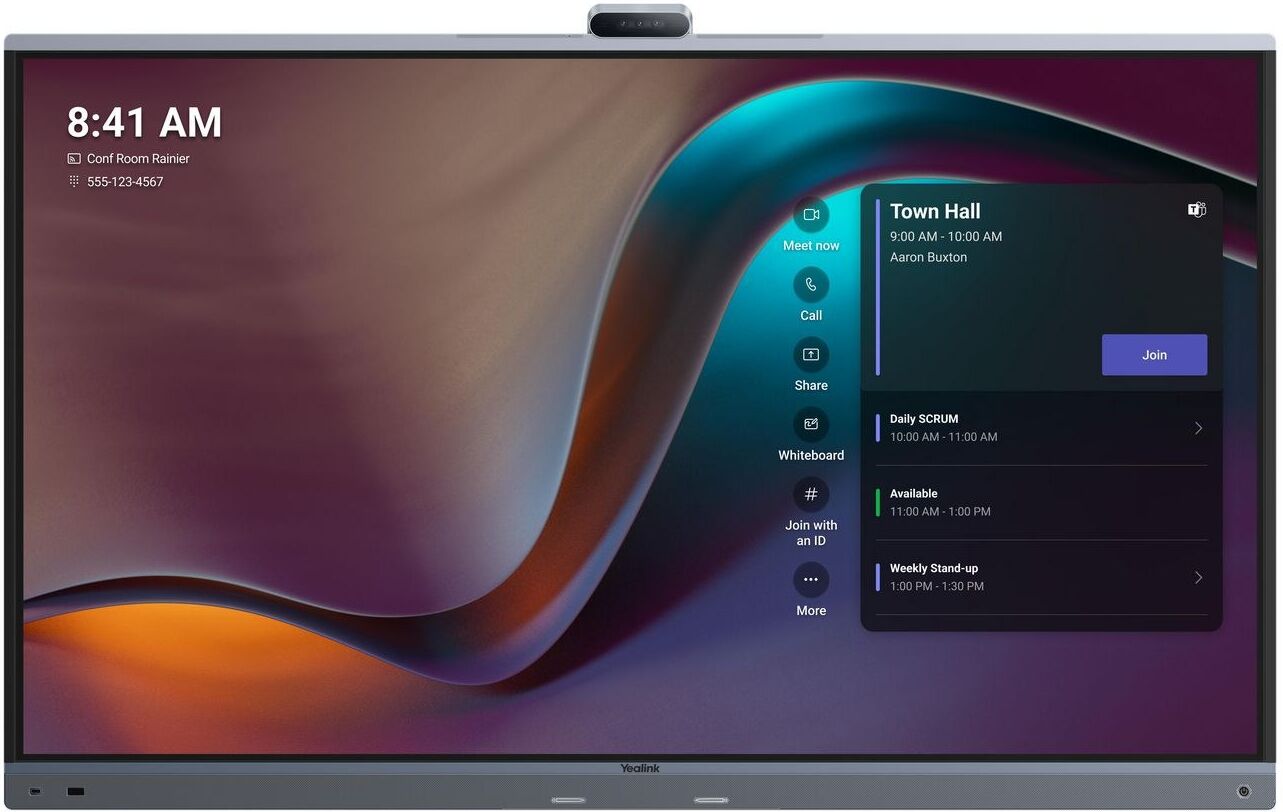
Yealink MeetingBoard 65-inch 4K Interactive Collaboration Display (MB65-A001)Yealink MeetingBoard 65 (MB65-A001): a 65-inch 4K Ultra HD LED-backlit interactive touch display for meeting rooms, with built-in camera, microphone array and speakers for Microsoft Teams Rooms and Zoom Rooms. Runs Android with a built-in processor and Wi-Fi.3896,99 £*Shipping: 0,00 £Secure redirect to the provider




-
How can one convert the energy of different photons into monochromatic photons?
One way to convert the energy of different photons into monochromatic photons is through a process called frequency doubling or second harmonic generation. This involves passing the photons through a nonlinear crystal, which causes the photons to combine and create new photons with double the frequency and half the wavelength of the original photons. This results in monochromatic photons with a single, specific wavelength. Another method is through the use of filters or monochromators, which can selectively filter out photons of specific wavelengths, allowing only monochromatic photons to pass through. **
-
What happens when a single-colored monochromatic light hits a surface of a different color?
When a single-colored monochromatic light hits a surface of a different color, the surface will absorb some of the light and reflect the rest. The color of the surface is determined by the wavelengths of light that it reflects. If the surface color is different from the color of the incoming light, the reflected light will be a combination of the two colors, creating a new color. This is because the surface absorbs some wavelengths of the incoming light and reflects others, resulting in a different color being perceived by the human eye. **
-
How are the frequency and intensity varied in systematic experiments when a photocathode is irradiated with monochromatic light?
In systematic experiments, the frequency and intensity of the monochromatic light can be varied to study the photoelectric effect on a photocathode. By changing the frequency of the light, researchers can investigate the threshold frequency required for the emission of electrons from the photocathode. Increasing the intensity of the light can help to study the relationship between the number of emitted electrons and the intensity of the light. By systematically varying these parameters, researchers can gain a better understanding of the photoelectric effect and the behavior of the photocathode. **
-
Will the development of technology ever stop?
It is unlikely that the development of technology will ever stop. As long as there are new problems to solve and new opportunities to explore, there will be a need for technological innovation. Additionally, the pace of technological advancement has been accelerating in recent years, with new breakthroughs and discoveries constantly pushing the boundaries of what is possible. While the specific direction and focus of technological development may change over time, it is likely that the overall trend of progress will continue. **

Why is the development of technology not progressing faster?
The development of technology is not progressing faster due to a variety of factors. One reason is the complexity of the problems that technology aims to solve, which often require extensive research and testing. Additionally, there are limitations in funding and resources for technological development, which can slow down progress. Furthermore, ethical and regulatory considerations can also hinder the rapid advancement of technology, as new innovations must be carefully evaluated for their potential impact on society. **
What is a specialist in information technology in application development?
A specialist in information technology in application development is a professional who focuses on creating and maintaining software applications. They have expertise in programming languages, software development methodologies, and application design. Their role involves analyzing user needs, designing application solutions, writing code, testing and debugging applications, and ensuring that they meet the required specifications and standards. These specialists often work closely with other IT professionals and stakeholders to deliver high-quality, user-friendly applications. **
Top-Angebote
Products related to Monochromatic:
-
Uplifted Finds Minimalist Monochromatic Cat Sculpture High Fidelity Sculptural Desktop Decor & Modern Home Gallery Accent Minimalist Monochromatic Cat Sculpture High Fidelity Sculptural Desktop Decor & Modern Home Gallery AccentInaugurate a powerful ZenSanctuary energy for your digital workspace with the ultimate 2026 hardwareintegrated decor solution. The Minimalist Cat Sculpture is the premier choice for creating a TechnicalModern or StudioLuxe atmosphere for your...48,97 $*Shipping: 0,00 $Secure redirect to the provider
-
Inspired Finds Ukiyo e Lucky Cat Decorative Book Box Hidden Storage Organizer surrealist edgy Monochromatic Faces And Eyes.Bring a touch of culture and clever functionality into your space with this Ukiyoe decor inspired storage piece. Designed to look like a refined art book, this hidden storage box blends seamlessly into your shelf while quietly keeping your...57,99 $*Shipping: 0,00 $Secure redirect to the provider
-
HARPERCOLLINS Creative Confidence by Tom & David Kelley – Unleashing Your Creative Potential & Innovation MindsetA powerful and inspiring book from the founders of IDEO, the award-winning design firm, on unleashing the creativity that lies within each and every one of us. Too often, companies and individuals assume that creativity and innovation are the domain of the ‘creative types’. But two of the foremost experts in innovation, design and creativity on the planet show us that each and every one of us is creative. In an entertaining and inspiring narrative that draws on countless stories from their work at IDEO, and with many of the world's top companies and design firms, David and Tom Kelley identify the principles and strategies that will allow us to tap into our creative potential in our work lives, and in our personal lives, allow us to think outside the box in terms of how we approach and solve problems. ‘Creative Confidence’ is a book that will help each of us be more productive and successful in our lives and in our careers.4,95 £*Shipping: 1,99 £Secure redirect to the provider
-
How can one create such monochromatic images?
To create monochromatic images, one can start by selecting a subject with a dominant color or tone. This could be a single object, a landscape, or a person wearing a specific color. Next, adjust the camera settings to enhance the chosen color or tone, such as increasing contrast or saturation. Finally, during post-processing, use editing software to further emphasize the monochromatic look by converting the image to black and white or desaturating all colors except the chosen one. **
-
Can polarizing filters be used to generate monochromatic light?
No, polarizing filters cannot be used to generate monochromatic light. Polarizing filters work by selectively allowing light waves that are oscillating in a specific direction to pass through, while blocking light waves oscillating in other directions. This can help to reduce glare and improve contrast in photography, but it does not change the color of the light. Monochromatic light is light of a single wavelength or color, and polarizing filters do not have the ability to change the wavelength or color of the light passing through them. **
-
How can one convert the energy of different photons into monochromatic photons?
One way to convert the energy of different photons into monochromatic photons is through a process called frequency doubling or second harmonic generation. This involves passing the photons through a nonlinear crystal, which causes the photons to combine and create new photons with double the frequency and half the wavelength of the original photons. This results in monochromatic photons with a single, specific wavelength. Another method is through the use of filters or monochromators, which can selectively filter out photons of specific wavelengths, allowing only monochromatic photons to pass through. **
-
What happens when a single-colored monochromatic light hits a surface of a different color?
When a single-colored monochromatic light hits a surface of a different color, the surface will absorb some of the light and reflect the rest. The color of the surface is determined by the wavelengths of light that it reflects. If the surface color is different from the color of the incoming light, the reflected light will be a combination of the two colors, creating a new color. This is because the surface absorbs some wavelengths of the incoming light and reflects others, resulting in a different color being perceived by the human eye. **
Similar search terms for Monochromatic
-
Dell Pro Silent Wired Collaboration Keyboard KB525C UK QWERTY - BlackProfessional wired collaboration keyboard featuring spill-resistant design and silent key switches. Includes 15 programmable shortcut keys, dedicated Copilot key, and volume controls for enhanced productivity. Full numeric keypad and UK QWERTY layout with comprehensive 3-year NBD Advance Exchange support.45,99 £*Shipping: 0,00 £Secure redirect to the provider
-
Yealink MeetingBoard 65-inch 4K Interactive Collaboration Display (MB65-A001)Yealink MeetingBoard 65 (MB65-A001): a 65-inch 4K Ultra HD LED-backlit interactive touch display for meeting rooms, with built-in camera, microphone array and speakers for Microsoft Teams Rooms and Zoom Rooms. Runs Android with a built-in processor and Wi-Fi.3896,99 £*Shipping: 0,00 £Secure redirect to the provider
-
Mobi Peeka Development MirrorPEEKA® developmental mirror was designed by our team of doctors, therapists and parents to help children explore, learn and grow. When you place PEEKA® in the hands of your little ones, you will be amazed at the variety of ways they find to play...26,99 $*Shipping: 0,00 $Secure redirect to the provider
-
Yealink MeetingBoard Pro 75-inch 4K Interactive Collaboration Display (MB75Pro-A02)Yealink MeetingBoard Pro 75 (MB75Pro-A02): an all-in-one 75-inch 4K UHD (3840 x 2160) anti-glare multi-touch display for medium-sized meeting rooms. It has a 400 cd/m² panel, a built-in triple-eye camera system (3 x 50 MP), a 16-MEMS microphone array and full-range speakers, and runs Microsoft Teams Rooms on Android with an interactive whiteboard and wireless content sharing.4732,99 £*Shipping: 0,00 £Secure redirect to the provider
-
How are the frequency and intensity varied in systematic experiments when a photocathode is irradiated with monochromatic light?
In systematic experiments, the frequency and intensity of the monochromatic light can be varied to study the photoelectric effect on a photocathode. By changing the frequency of the light, researchers can investigate the threshold frequency required for the emission of electrons from the photocathode. Increasing the intensity of the light can help to study the relationship between the number of emitted electrons and the intensity of the light. By systematically varying these parameters, researchers can gain a better understanding of the photoelectric effect and the behavior of the photocathode. **
-
Will the development of technology ever stop?
It is unlikely that the development of technology will ever stop. As long as there are new problems to solve and new opportunities to explore, there will be a need for technological innovation. Additionally, the pace of technological advancement has been accelerating in recent years, with new breakthroughs and discoveries constantly pushing the boundaries of what is possible. While the specific direction and focus of technological development may change over time, it is likely that the overall trend of progress will continue. **
-
Why is the development of technology not progressing faster?
The development of technology is not progressing faster due to a variety of factors. One reason is the complexity of the problems that technology aims to solve, which often require extensive research and testing. Additionally, there are limitations in funding and resources for technological development, which can slow down progress. Furthermore, ethical and regulatory considerations can also hinder the rapid advancement of technology, as new innovations must be carefully evaluated for their potential impact on society. **
-
What is a specialist in information technology in application development?
A specialist in information technology in application development is a professional who focuses on creating and maintaining software applications. They have expertise in programming languages, software development methodologies, and application design. Their role involves analyzing user needs, designing application solutions, writing code, testing and debugging applications, and ensuring that they meet the required specifications and standards. These specialists often work closely with other IT professionals and stakeholders to deliver high-quality, user-friendly applications. **
* All prices are inclusive of VAT and, if applicable, plus shipping costs. The offer information is based on the details provided by the respective shop and is updated through automated processes. Real-time updates do not occur, so deviations can occur in individual cases. ** Note: Parts of this content were created by AI.