Buy corporateinventionboard.eu ?
We are moving the project
corporateinventionboard.eu .
Are you interested in purchasing the domain
corporateinventionboard.eu ?
domain@kv-gmbh.de · 0541-91531010
Buy corporateinventionboard.eu ?
Is HCl an oxonium ion?
No, HCl is not an oxonium ion. An oxonium ion is a positively charged oxygen atom bonded to three other atoms. In the case of HCl, it is a molecule composed of one hydrogen atom and one chlorine atom, with no oxygen atom present. Therefore, HCl does not fit the definition of an oxonium ion. **
What are the oxonium ions?
Oxonium ions are positively charged ions that contain an oxygen atom with three bonds and a positive charge. These ions are formed when a proton (H+) is added to a water molecule (H2O), resulting in the formation of H3O+. Oxonium ions are commonly found in aqueous solutions and play a crucial role in acid-base chemistry, as they are often used to represent the hydronium ion in acidic solutions. **


Similar search terms for Oxonium
Top-Angebote
Products related to Oxonium:
-
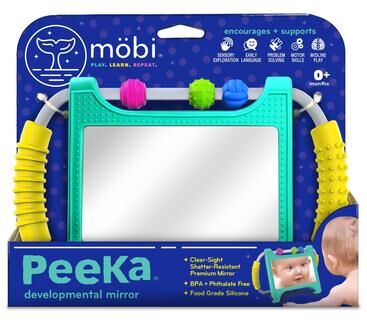
Mobi Peeka Development MirrorPEEKA® developmental mirror was designed by our team of doctors, therapists and parents to help children explore, learn and grow. When you place PEEKA® in the hands of your little ones, you will be amazed at the variety of ways they find to play...30,49 $*Shipping: 0,00 $Secure redirect to the provider
-
HARPERCOLLINS Creative Confidence by Tom & David Kelley – Unleashing Your Creative Potential & Innovation MindsetA powerful and inspiring book from the founders of IDEO, the award-winning design firm, on unleashing the creativity that lies within each and every one of us. Too often, companies and individuals assume that creativity and innovation are the domain of the ‘creative types’. But two of the foremost experts in innovation, design and creativity on the planet show us that each and every one of us is creative. In an entertaining and inspiring narrative that draws on countless stories from their work at IDEO, and with many of the world's top companies and design firms, David and Tom Kelley identify the principles and strategies that will allow us to tap into our creative potential in our work lives, and in our personal lives, allow us to think outside the box in terms of how we approach and solve problems. ‘Creative Confidence’ is a book that will help each of us be more productive and successful in our lives and in our careers.4,95 £*Shipping: 1,99 £Secure redirect to the provider
-
Yealink MeetingBoard 65-inch 4K Interactive Collaboration Display (MB65-A001)Yealink MeetingBoard 65 (MB65-A001): a 65-inch 4K Ultra HD LED-backlit interactive touch display for meeting rooms, with built-in camera, microphone array and speakers for Microsoft Teams Rooms and Zoom Rooms. Runs Android with a built-in processor and Wi-Fi.3896,99 £*Shipping: 0,00 £Secure redirect to the provider
-
Dell Pro Silent Wired Collaboration Keyboard KB525C UK QWERTY - BlackProfessional wired collaboration keyboard featuring spill-resistant design and silent key switches. Includes 15 programmable shortcut keys, dedicated Copilot key, and volume controls for enhanced productivity. Full numeric keypad and UK QWERTY layout with comprehensive 3-year NBD Advance Exchange support.45,99 £*Shipping: 0,00 £Secure redirect to the provider



-
How can oxonium ions be detected?
Oxonium ions can be detected using various analytical techniques such as mass spectrometry, nuclear magnetic resonance (NMR) spectroscopy, and ion chromatography. In mass spectrometry, oxonium ions can be identified by their characteristic mass-to-charge ratio, allowing for their detection and quantification. In NMR spectroscopy, the chemical shifts and coupling patterns of protons in oxonium ions can be used to identify their presence in a sample. Ion chromatography separates and detects ions based on their charge, allowing for the detection of oxonium ions in a mixture. Overall, these techniques provide valuable tools for the detection and analysis of oxonium ions in various chemical and biological systems. **
-
What is the concentration of oxonium ions?
The concentration of oxonium ions, also known as hydronium ions (H3O+), in a solution can be calculated using the formula: pH = -log[H3O+]. This formula allows us to determine the concentration of oxonium ions based on the pH of the solution. For example, a solution with a pH of 3 has a concentration of oxonium ions of 1 x 10^-3 M (moles per liter). Therefore, the concentration of oxonium ions can be determined by measuring the pH of the solution and using the pH formula to calculate the concentration. **
-
What are oxonium ions and hydroxide ions?
Oxonium ions are positively charged ions formed when a water molecule gains a hydrogen ion, resulting in the formation of H3O+. These ions are commonly found in acidic solutions and are responsible for the acidic properties of the solution. Hydroxide ions, on the other hand, are negatively charged ions formed when a water molecule loses a hydrogen ion, resulting in the formation of OH-. These ions are commonly found in basic solutions and are responsible for the basic properties of the solution. Both oxonium ions and hydroxide ions play important roles in the pH of a solution and are key components in understanding acid-base chemistry. **
-
What is an oxonium ion in chemistry?
An oxonium ion is a positively charged ion that contains an oxygen atom with three bonds and one lone pair of electrons. It is formed when a proton (H+) is added to a water molecule, creating the hydronium ion (H3O+). Oxonium ions can also be formed when other oxygen-containing compounds, such as alcohols or ethers, undergo protonation. These ions are important in various chemical reactions and are often involved in acid-base chemistry. **


How did the term oxonium ion come about?
The term oxonium ion originated from the concept of protonation in organic chemistry. When a proton is added to an oxygen atom, it forms a positively charged species known as an oxonium ion. This term is derived from the Greek word "oxys," meaning sharp or acidic, and "onium," which is a suffix used to denote a positively charged ion. The oxonium ion is an important intermediate in many organic reactions and plays a crucial role in acid-catalyzed processes. **
Can the oxonium ion H3O+ react with water H2O?
Yes, the oxonium ion H3O+ can react with water H2O. In fact, the oxonium ion is formed when a water molecule accepts a proton (H+) from another water molecule, resulting in the formation of H3O+. This reaction is a key step in the process of autoionization of water, where water molecules can act as both acids and bases. **
Top-Angebote
Products related to Oxonium:
-
Sesderma Reti Age 5 Liposomal Serum Anti-Aging Innovation 30mLA facial serum for wrinkles and signs of ageing. Reduces wrinkles and fine lines. Hydrates and strengthens barrier. Restores youthful radiance. 5-Retinoid System: smooths wrinkles, accelerates renewal, and boosts collagen. Biomimetic Peptides: fill expression lines by stimulating collagen synthesis.41,69 £*Shipping: 5,34 £Secure redirect to the provider
-
Mobi Peeka Development MirrorPEEKA® developmental mirror was designed by our team of doctors, therapists and parents to help children explore, learn and grow. When you place PEEKA® in the hands of your little ones, you will be amazed at the variety of ways they find to play...30,49 $*Shipping: 0,00 $Secure redirect to the provider
-
HARPERCOLLINS Creative Confidence by Tom & David Kelley – Unleashing Your Creative Potential & Innovation MindsetA powerful and inspiring book from the founders of IDEO, the award-winning design firm, on unleashing the creativity that lies within each and every one of us. Too often, companies and individuals assume that creativity and innovation are the domain of the ‘creative types’. But two of the foremost experts in innovation, design and creativity on the planet show us that each and every one of us is creative. In an entertaining and inspiring narrative that draws on countless stories from their work at IDEO, and with many of the world's top companies and design firms, David and Tom Kelley identify the principles and strategies that will allow us to tap into our creative potential in our work lives, and in our personal lives, allow us to think outside the box in terms of how we approach and solve problems. ‘Creative Confidence’ is a book that will help each of us be more productive and successful in our lives and in our careers.4,95 £*Shipping: 1,99 £Secure redirect to the provider
-
Is HCl an oxonium ion?
No, HCl is not an oxonium ion. An oxonium ion is a positively charged oxygen atom bonded to three other atoms. In the case of HCl, it is a molecule composed of one hydrogen atom and one chlorine atom, with no oxygen atom present. Therefore, HCl does not fit the definition of an oxonium ion. **
-
What are the oxonium ions?
Oxonium ions are positively charged ions that contain an oxygen atom with three bonds and a positive charge. These ions are formed when a proton (H+) is added to a water molecule (H2O), resulting in the formation of H3O+. Oxonium ions are commonly found in aqueous solutions and play a crucial role in acid-base chemistry, as they are often used to represent the hydronium ion in acidic solutions. **
-
How can oxonium ions be detected?
Oxonium ions can be detected using various analytical techniques such as mass spectrometry, nuclear magnetic resonance (NMR) spectroscopy, and ion chromatography. In mass spectrometry, oxonium ions can be identified by their characteristic mass-to-charge ratio, allowing for their detection and quantification. In NMR spectroscopy, the chemical shifts and coupling patterns of protons in oxonium ions can be used to identify their presence in a sample. Ion chromatography separates and detects ions based on their charge, allowing for the detection of oxonium ions in a mixture. Overall, these techniques provide valuable tools for the detection and analysis of oxonium ions in various chemical and biological systems. **
-
What is the concentration of oxonium ions?
The concentration of oxonium ions, also known as hydronium ions (H3O+), in a solution can be calculated using the formula: pH = -log[H3O+]. This formula allows us to determine the concentration of oxonium ions based on the pH of the solution. For example, a solution with a pH of 3 has a concentration of oxonium ions of 1 x 10^-3 M (moles per liter). Therefore, the concentration of oxonium ions can be determined by measuring the pH of the solution and using the pH formula to calculate the concentration. **
Similar search terms for Oxonium
-
Yealink MeetingBoard 65-inch 4K Interactive Collaboration Display (MB65-A001)Yealink MeetingBoard 65 (MB65-A001): a 65-inch 4K Ultra HD LED-backlit interactive touch display for meeting rooms, with built-in camera, microphone array and speakers for Microsoft Teams Rooms and Zoom Rooms. Runs Android with a built-in processor and Wi-Fi.3896,99 £*Shipping: 0,00 £Secure redirect to the provider
-
Dell Pro Silent Wired Collaboration Keyboard KB525C UK QWERTY - BlackProfessional wired collaboration keyboard featuring spill-resistant design and silent key switches. Includes 15 programmable shortcut keys, dedicated Copilot key, and volume controls for enhanced productivity. Full numeric keypad and UK QWERTY layout with comprehensive 3-year NBD Advance Exchange support.45,99 £*Shipping: 0,00 £Secure redirect to the provider
-
Yealink MeetingBoard Pro 75-inch 4K Interactive Collaboration Display (MB75Pro-A02)Yealink MeetingBoard Pro 75 (MB75Pro-A02): an all-in-one 75-inch 4K UHD (3840 x 2160) anti-glare multi-touch display for medium-sized meeting rooms. It has a 400 cd/m² panel, a built-in triple-eye camera system (3 x 50 MP), a 16-MEMS microphone array and full-range speakers, and runs Microsoft Teams Rooms on Android with an interactive whiteboard and wireless content sharing.4732,99 £*Shipping: 0,00 £Secure redirect to the provider
-
Classic Editions The Complete Art of War – 8 Book Hardback Box Set Sun Tzu & Ancient Chinese Military Strategy Classics Leadership, Warfare & Strategy CollectionExplore centuries of strategic thinking with The Complete Art of War – 8 Books Collection Hardback Box Set, an impressive collection of classical Chinese writings on warfare, leadership, tactics and strategy. Bringing together influential works from ancient Chinese military thought, this hardback collection includes titles such as The Art of War, Methods of the Sima, Wuzi, Wei Liaozi, Three Strategies of Huang Shigong, and Six Secret Teachings of Taigong, alongside additional works included in the eight-volume set. These enduring texts examine subjects including leadership, planning, discipline, intelligence, diplomacy, battlefield tactics and strategic decision-making. Although written in the context of ancient warfare, many of their principles have subsequently attracted readers interested in history, leadership and strategic thinking. Presented as an 8-volume hardback boxed collection, the set is ideal for readers of military history, students of classical philosophy and collectors of beautifully presented classic works. Why Readers Will Love This Collection Includes 8 hardback volumes in a collectible box set Features influential works of ancient Chinese military strategy Explores strategy, leadership, tactics and decision-making Excellent addition to military history and philosophy collections Attractive hardback format for a home or study library Ideal gift for history, strategy and classic literature enthusiasts The Complete Art of War 8 Book Collection brings together some of history's most enduring works on strategy in one impressive hardback set. Titles In This Set: Notebook Questions and Replies Three Strategies of Huang Shigong Wuzi Wei Liaozi The Methods of The Sima Six Secret Teachings of Taigong The Art of War16,99 £*Shipping: 2,99 £Secure redirect to the provider
-
What are oxonium ions and hydroxide ions?
Oxonium ions are positively charged ions formed when a water molecule gains a hydrogen ion, resulting in the formation of H3O+. These ions are commonly found in acidic solutions and are responsible for the acidic properties of the solution. Hydroxide ions, on the other hand, are negatively charged ions formed when a water molecule loses a hydrogen ion, resulting in the formation of OH-. These ions are commonly found in basic solutions and are responsible for the basic properties of the solution. Both oxonium ions and hydroxide ions play important roles in the pH of a solution and are key components in understanding acid-base chemistry. **
-
What is an oxonium ion in chemistry?
An oxonium ion is a positively charged ion that contains an oxygen atom with three bonds and one lone pair of electrons. It is formed when a proton (H+) is added to a water molecule, creating the hydronium ion (H3O+). Oxonium ions can also be formed when other oxygen-containing compounds, such as alcohols or ethers, undergo protonation. These ions are important in various chemical reactions and are often involved in acid-base chemistry. **
-
How did the term oxonium ion come about?
The term oxonium ion originated from the concept of protonation in organic chemistry. When a proton is added to an oxygen atom, it forms a positively charged species known as an oxonium ion. This term is derived from the Greek word "oxys," meaning sharp or acidic, and "onium," which is a suffix used to denote a positively charged ion. The oxonium ion is an important intermediate in many organic reactions and plays a crucial role in acid-catalyzed processes. **
-
Can the oxonium ion H3O+ react with water H2O?
Yes, the oxonium ion H3O+ can react with water H2O. In fact, the oxonium ion is formed when a water molecule accepts a proton (H+) from another water molecule, resulting in the formation of H3O+. This reaction is a key step in the process of autoionization of water, where water molecules can act as both acids and bases. **
* All prices are inclusive of VAT and, if applicable, plus shipping costs. The offer information is based on the details provided by the respective shop and is updated through automated processes. Real-time updates do not occur, so deviations can occur in individual cases. ** Note: Parts of this content were created by AI.